The Cloud Cost Crisis: Closing the Budget Loop with Proactive Optimisation
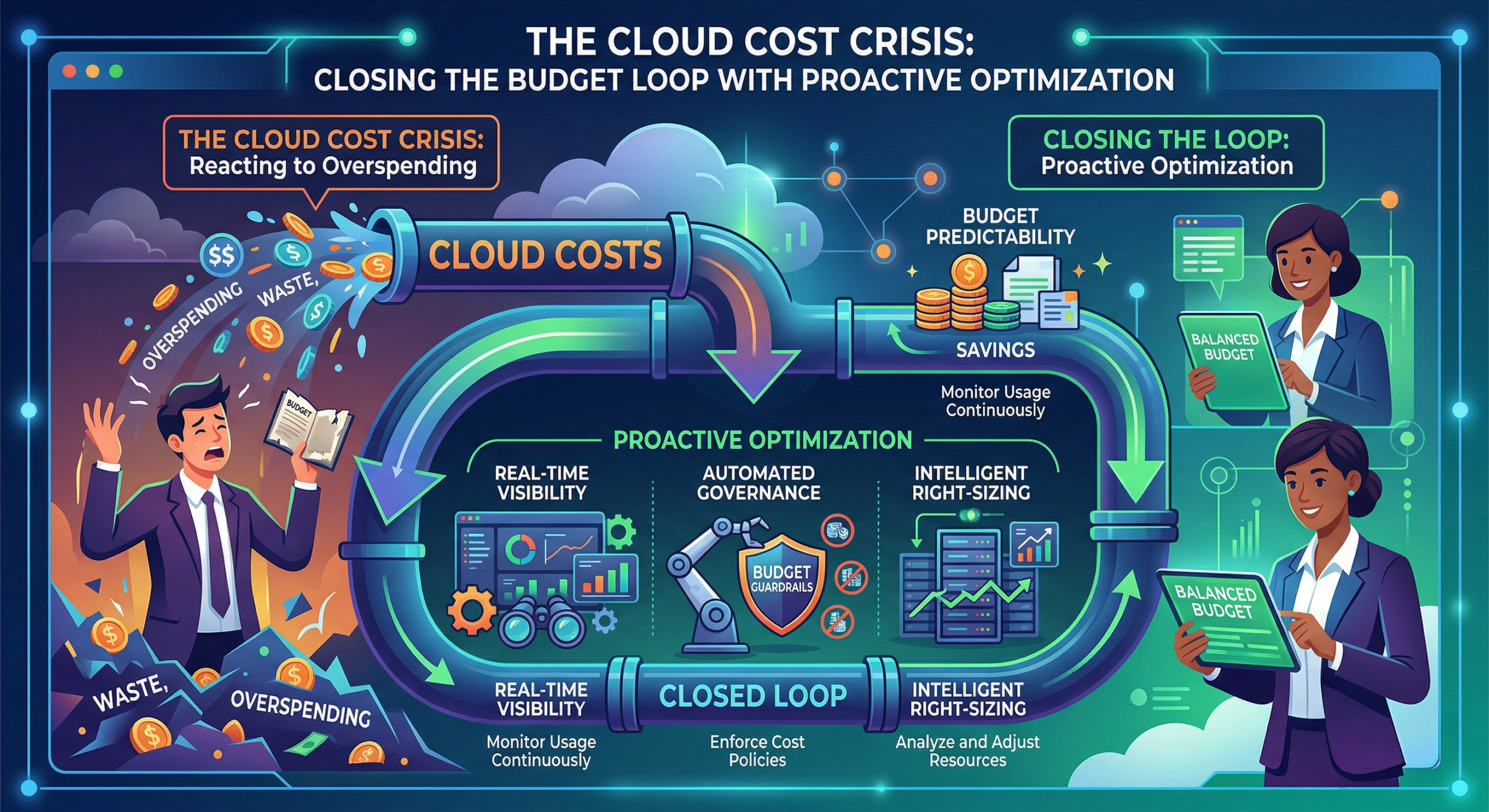
For many companies, the initial migration to the cloud was a celebration of agility and speed. Developers could spin up servers in seconds, and global scalability seemed like a given. However, that agility came with a hidden danger: unmanaged consumption.
In 2026, many IT budgets are facing a crisis. Companies are realizing they aren’t paying for what they need; they are paying for what they provisioned and forgot.
This is the Cloud Cost Crisis, and a reactive, once-a-year budget review will not fix it.
Moving Beyond Reactive Cost Cutting
When businesses face high cloud bills, the traditional, reactive response is a sudden, uncoordinated “cut everything” campaign. This “dumb” approach often harms performance, reduces reliability, and stifles innovation.
At Gigaloops, we implement a proactive, continuous improvement loop based on the principle of Cloud FinOps (Financial Operations).
1. Total Visibility and Allocation
You cannot optimize what you cannot measure. A major source of waste is “shadow IT” or unallocated resources. Our initial step is to build comprehensive, real-time dashboards that provide granularity: which team, which project, and which specific application is driving cost.
- Proactive approach: We use automated resource tagging. Every new server, database, or container spun up must be tagged with its owner and cost center before it goes live. This ensures 100% cost accountability from day one.
2. rightsizing and Infrastructure Architecture
Most businesses over-provision resources “just in case.” They might run a database at 90% idle capacity. In the legacy datacenters, this was standard; in the cloud, it’s expensive waste.
- Proactive approach: We build intelligence into your deployment pipeline. Before code is merged, our “loops” analyse the software’s performance data and proactively recommend the smallest, most efficient infrastructure needed to run it. If your WordPress database on a site like gigaloping.com can run on a cheaper instance size, the system scales down automatically without waiting for a manual review.
3. Automated Waste Elimination
Automation is the key to sustainable optimization. The biggest money-wasters are “zombie resources”—idle databases, unattached storage volumes, and developer environments left running over the weekend.
- Proactive approach: Gigaloops deploys automated agents that actively monitor your environments. These agents are programmed with your business logic. For example:
- Automatically shutting down non-production environments during off-hours (evenings and weekends).
- Identifying and pruning unused data backups after a predetermined retention period.
- Alerting when specific resources exceed their historical cost baseline.
Summary: A Loop of Savings and Performance
Optimizing cloud cost is not about sacrificing speed; it’s about engineering efficiency. By closing the budget loop and integrating financial intelligence into the software lifecycle, your business stops wasting capital on infrastructure and can reinvest those savings back into developing new features and products.
Is your monthly cloud bill holding your innovation hostage? Join the optimization loop and discover a leaner, smarter cloud strategy.