
Development
Beyond the Monolith: A Developer’s Guide to Microservices
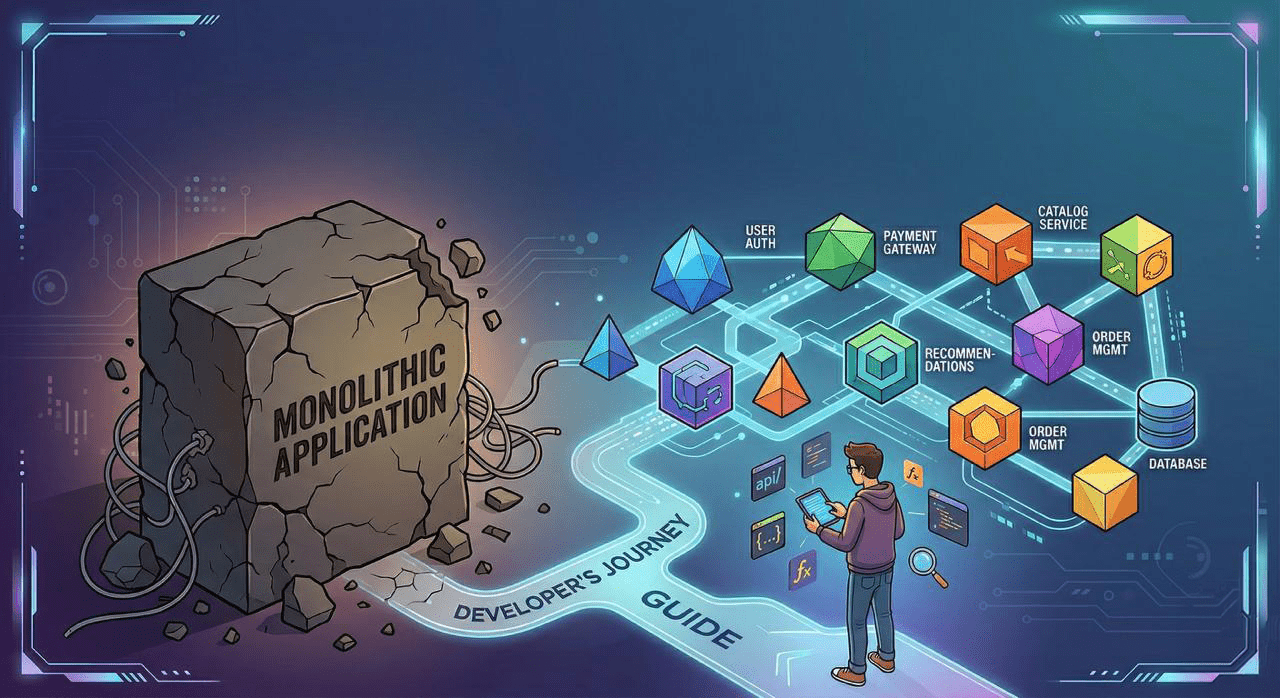
Every developer knows the feeling. You start with a clean, simple codebase. It’s fast, it’s easy to deploy, and everyone understands how it works. But as the company grows, that “simple” app turns into a “Big Ball of Mud.” Deployments take hours, a single bug in the payment gateway crashes the entire site, and onboarding new devs feels like teaching someone to navigate a labyrinth blindfolded.
What Exactly is Microservices?
In a Monolithic architecture, all software components of an application are bundled together as a single unit. In a Microservices architecture, the application is broken down into a collection of small, independent services that communicate over well-defined APIs.
Why Make the Switch?
- Independent Scaling: If your video processing service is lagging, you can scale just that service without touching the rest of the app.
- Tech Stack Flexibility: Want to use Python for AI and Go for high-performance networking? In a microservices world, you can.
- Fault Isolation: A crash in the “User Profile” service doesn’t necessarily take down the “Checkout” service.
The “Hidden” Challenges
It’s not all sunshine and rainbows. Moving to microservices introduces new complexities:
- Network Latency: More services mean more internal API calls.
- Data Consistency: Keeping databases in sync across services is much harder than a single SQL join.
- Operational Overhead: You aren’t managing one app anymore; you’re managing an ecosystem (Enter: Kubernetes and Docker).